Hypothyroidism in Children: The Hidden Clues Parents Need to Know

Hypothyroidism in Children: The Hidden Clues Parents Need to Know

Hypothyroidism isn’t just an adult problem. Children can have hypothyroidism, even with normal TSH.

I learned this firsthand when my son Jack was nine years old.

Jack was struggling with weight, having trouble focusing in school, and feeling low on energy. It wasn’t a matter of “just eat less, pay more attention, or try to exercise more.”

I remember looking into his eyes and seeing that dull, flat look that I knew all too well. It was the same look I had when I was struggling with undiagnosed hypothyroidism.

Weight Gain Can Be a Clue

In an effort to help, we tried a very strict diet (no grains, no flour, minimal sugar.) Jack was a real trooper.

For breakfast, he had eggs, potatoes, and lettuce. For lunch, high protein like meat and cheese rollups, or smoothies made with yogurt, frozen fruit, chocolate, and stevia. Dinner was a hamburger without the bun.

It wasn’t easy, but we made it fun and tried to keep meals satisfying.

Most people on this kind of diet would lose weight. But not Jack.

That’s what makes hypothyroidism so frustrating. You can eat all the “right” foods, but if your thyroid is struggling, weight loss can feel impossible.

What this experience showed me was that Jack didn’t have an issue with overeating, he had underlying hypothyroidism. And until we supported his thyroid, no diet was going to “fix” the problem.

When Doctors Miss the Signs

At first, Jack’s primary doctor said his thyroid was fine because his TSH was normal. They never shared the actual number, and they didn’t run any other tests.

I wish I had known then what I know now: TSH isn’t the whole story.

Many children (and adults) have hypothyroidism with normal TSH. It’s one of the biggest reasons people get misdiagnosed and stay stuck in symptoms for years.

Jack had the classic signs of hypothyroidism—weight gain, low energy, trouble focusing, and that puffy, tired look. Once I started connecting the dots, it all made sense.

What I Want Other Parents to Know

If your child is struggling with weight gain, fatigue, mood swings, or trouble focusing, it’s not “just the age” or “just the diet.”

Your child’s body may be sending clues that their thyroid needs support.

When I finally understood this, it changed everything for our family.

That’s why I’m so passionate about helping other parents understand the missing piece. Your child’s thyroid health affects everything: their energy, mood, focus, and growth.

The Next Step

If you suspect your child might be struggling with hypothyroidism, I want you to know there’s hope and a better way to help them feel better.

The HypoHero™ Thyroid Protocol teaches you how to spot the signs, track the clues, and support thyroid and adrenal health naturally.

This method has helped thousands of hypothyroid patients uncover hidden patterns and start their journey to healing.

👉 Learn more about the HypoHero™ Thyroid Protocol and take the first step toward helping your child feel like themselves again.

Miss LizzyHypothyroidism in Children: The Hidden Clues Parents Need to Know
My Journey with Hypothyroidism

My Journey with Hypothyroidism

Miss Lizzy founded the HypoHero Thyroid Protocol, a proven strategy to restore energy, focus, and metabolism for those struggling with hypothyroidism. After battling undiagnosed hypothyroidism and low body temperature for 35 years, Miss Lizzy developed a transformative 3-phase protocol that has helped thousands reclaim their health and vitality. Her mission is to empower others with the tools, supplements, and support they need to thrive.

WHAT WE TALK ABOUT

  • Miss Lizzy’s personal journey with undiagnosed hypothyroidism and medical gaslighting.
  • Common symptoms of thyroid dysfunction that often get dismissed.
  • Why TSH testing alone fails so many patients.
  • The importance of tracking body temperature to understand thyroid function.
  • How low body temperature affects metabolism, energy, and weight loss.
  • The role of halogens (bromide, chlorine, fluoride) in blocking thyroid function.
  • Why iodine is misunderstood and how to use it safely, especially with Hashimoto’s.
  • A breakdown of the Hypohero Protocol: Restore, Detox, Optimize.
  • Supporting adrenal health as part of thyroid recovery.
  • How Miss Lizzy’s tracker empowers patients to advocate for their health.
  • A powerful success story from the Hypohero community.
Miss LizzyMy Journey with Hypothyroidism
The Importance of Body Temperature in Thyroid and Adrenal Health

The Importance of Body Temperature in Thyroid and Adrenal Health

One of the most important lessons I learned in my thyroid and adrenal journey is this: your body temperature tells the truth.

No one told me about temperature tracking. I didn’t read it in a book or hear it from a doctor. I discovered it because I was so fed up with the endless cycle of labs, medications, and symptoms that didn’t make sense.

I was tired of waiting for test results that didn’t match how I felt. I knew something wasn’t right and was determined to figure it out. That’s when I started taking my temperature out of curiosity, frustration, and honestly, desperation.

Most doctors had dismissed my low body temperature as “normal,” but through years of research, I found thyroid experts like Dr. Broda Barnes, Dr. James L. Wilson, and Paul Robinson who talked about the importance of body temperature for thyroid and adrenal health. So I started tracking.

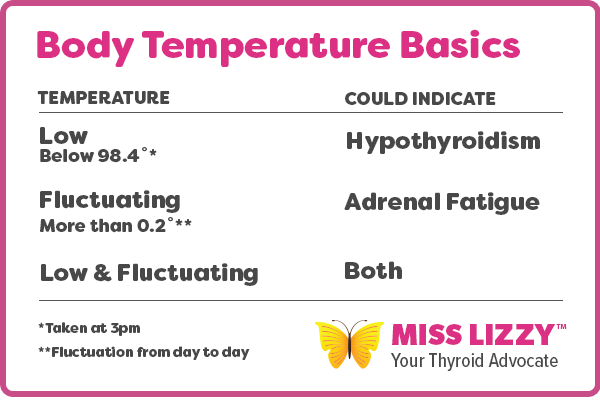
And what I found was shocking. My temperature was consistently low and fluctuated wildly, sometimes dropping as low as 95.5°F in the afternoon. No wonder I felt so many symptoms—fatigue, brain fog, cold hands and feet, and that constant feeling that my body just wasn’t keeping up.

That was the turning point. Tracking my temperature became the tool that helped me finally understand what my body was trying to tell me. When thyroid lab testing failed me, tracking body temperature saved me.

Low Temperature Is a Clue, Not a Fluke

Low body temperature is one of the clearest signs that your thyroid and adrenals are struggling. It’s a message from your body that it’s running too slow, that something is off with your metabolism, and that your thyroid needs support.

If you’re waking up tired, struggling to focus, feeling cold all the time, or noticing stubborn weight gain, you’re not imagining it. And you’re not alone. Your temperature may hold the answers.

What I Wish I’d Known Sooner

If I had known how to track my temperature the right way and use it to guide my healing, I could have saved myself years of frustration.

That’s why temperature tracking is the foundation of the HypoHero™ Thyroid Protocol. It’s not just about taking random readings or guessing what they mean. It’s about learning how to spot patterns, understand the clues your body is giving you, and use that information to empower your healing.

This isn’t something most doctors teach you. And it’s not something you can just figure out from a quick internet search. It took me years of trial and error to uncover this system, so I built the HypoHero™ Thyroid Protocol to guide others through it, step by step.

The Path to Healing

If you’re frustrated by thyroid lab results and thyroid medications that aren’t helping, and you have ongoing symptoms that don’t make sense, there’s a better way. Your temperature holds the clues. You need the right system to understand it and know what to do next.

That’s what the HypoHero™ Thyroid Protocol is here to help you with.

👉 Learn more about the HypoHero™ Thyroid Protocol and take the first step toward understanding what your body is trying to tell you.

Miss LizzyThe Importance of Body Temperature in Thyroid and Adrenal Health
High Cholesterol & Hypothyroidism

High Cholesterol & Hypothyroidism

For many people with high cholesterol the underlying issue may actually be hypothyroidism. Rather than diagnosing and treating the hypothyroidism, many people are told they simply need to eat healthier, exercise more and take medicine to lower their cholesterol.

What’s worse is that sometimes doctors make us feel bad, like we must be fat, unhealthy people who have no control over ourselves when in fact it could be low thyroid.

 When the thyroid slows down (hypothyroidism), it also slows down the body’s ability to process cholesterol.
– Heather M. Ross, About.com

Certainly eating healthier and exercising are good, but cholesterol medicines (statins) have some scary side effects. But even more important, properly treating hypothyroidism could result in naturally lowering cholesterol, like it did for me and many others. On Stop the Thyroid Madness read people’s stories about how they lowered their cholesterol, not through statins, but through the right combination of desiccate thyroid medicine and other treatments.

When I was 18 years old, a doctor told me I had high cholesterol but no one made the connection to hypothyroidism. At that time in my life I was about 15lbs overweight. The doctor made me feel like I was fat and unhealthy, so I was therefore to blame for having high cholesterol at such a young age.

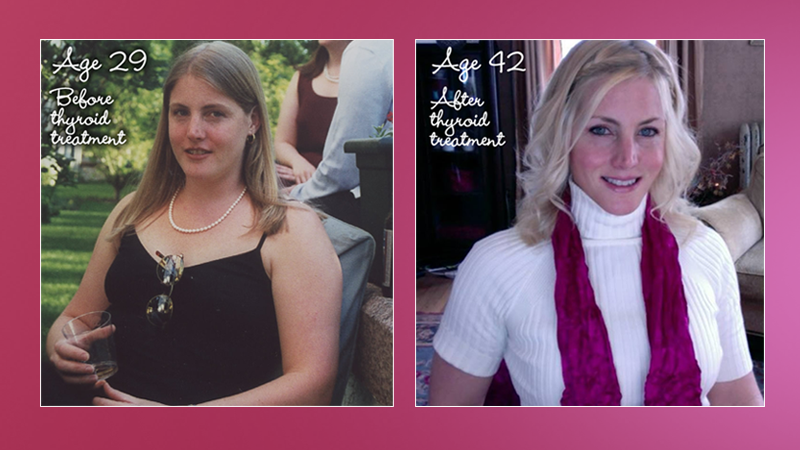
Now at age 41, on proper thyroid treatment my cholesterol is completely normal and healthy. Like me, if you have high cholesterol as a result of hypothyroidism learn more about thyroid symptoms, understanding thyroid lab work (even when the results say you are normal), and finding and good doctor:


Miss LizzyHigh Cholesterol & Hypothyroidism
Blood Pressure & Hypothyroidism

Blood Pressure & Hypothyroidism

According to the Stop the Thyroid Madness , blood pressure and Hypothyroidism can go hand-in-hand.

Apparently, it is common to have low blood pressure due to thyroid disease or being treated with T4-only medicines like Levoxyl, Synthroid, Extroxin, etc…

If untreated or treated with these T4-only medicine, low blood pressure can take an ugly turn into high blood pressure. Learn more. For some people, the root of solving blood pressure problems can be found in good thyroid treatment.

Before being treated for Hypothyroidism I had low blood pressure. On the Mayo Clinic website, the symptoms of low blood pressure can include:

  • Dizziness or lightheadedness
  • Fainting
  • Lack of concentration
  • Blurred vision
  • Nausea
  • Cold, clammy, pale skin
  • Rapid, or shallow breathing
  • Fatigue
  • Depressions
  • Thirst

For years I experienced many of the symptoms noted above. Especially lightheadedness or a woozy feeling when I stood up too quickly (or inverted like a in the yoga pose downward dog, lack of concentration for everyday tasks (my brain and thinking felt soft and foggy), overall fatigue and low energy, a low grade depression.

Sometimes we become so accustomed to symptoms we believe it’s “normal”. After being treated for Hypothyroidism with Natural Dessicated Thyroid medicine (and Iodine for me personally) these symptoms all cleared up and my blood pressure became normal!!

Treatment for Blood Pressure

According to Janie Bowthorp, of Stop the Thyroid Madness, common treatment for hypothyroidism symptoms (including blood pressure) include:

  • Iodine (if one is Iodine deficient)
  • Natural Desiccated Thyroid Medicine

Symptoms are removed, lives are returned to being active, moods are improved as is one’s entire health and well-being.


J.CROW’S® Lugol’s Solution of Iodine 5%
Follow me on Facebook

Miss LizzyBlood Pressure & Hypothyroidism
Boost Thyroid Medicine in Winter

Boost Thyroid Medicine in Winter

Here is my new video about Hypothyroidism and the winter blues on Youtube!

REPOST FROM FEB 2011

Here it is March 2014 and I am thinking “Wow, I’ve been feeling kind of blue lately.” It’s the yearly seasonal thyroid drop, which always happens around early March and goes until May. Late winter through early spring can be hard for those of us with hypothyroidism. Even when we are on good thyroid medicine! It reminded me of my blog post from last year on this exact topic. Sheesh, even I have a hard time seeing my own symptoms!

PL0000003849_card_lgThis time of year is always tough for me. The days are getting longer, there is more light and I feel like I should be feeling great. But sure enough, I feel the low-grade depression sneaking up on me again. It usually sets in just before the forsythia bloom (so early March here in New England). When I finally got treatment for hypothyroidism I learned this depression is actually low thyroid!

Apparently thyroid function drops in the late winter/early spring months which creates a low-grade depression for many of us. It feels like SAD (seasonal affective disorder), general depression, or just a heaviness. I know it’s not SAD because I still have it even when I get plenty of sunlight. And I know it’s not traditional depression because it lasts only a few months, and it’s always around this time of year.

So this is a reminder… to help get through the winter blues many of us need to increase our thyroid medicine about 1/4 pill just for a few months. (I might add, who wants to take anti-depressants and gain weight?!) For me the depression starts around now and sometimes lasts through May. When I start to feel light and buoyant again I know I can ease back to my normal dose of thyroid medicine.


Miss LizzyBoost Thyroid Medicine in Winter
Exercise and Hypothyroidism

Exercise and Hypothyroidism

Determined? Absolutely. This is me at Crossfit where we climb ropes, run, row, lift heavy barbells. A one mile run is often just the warm up. Ten years ago, a one mile run would have landed me in bed for days. Imagine the difference in my life!

Yesterday I reached an exciting milestone. After a year at CrossFit, something I never would have imagined possible before hypothyroid and adrenal treatment, I did my very first unassisted pull-up. Hanging from the bar, full dead-weight, unassisted pull-up. It was so exciting. The most important part is what went through my head:

I WANT IT!!

These words are the single most powerful phrase in my life. Until that moment, I only kind-of wanted the pull-up. I hadn’t actually told my mind that I really wanted it. Saying these words propelled me up, giving me a deep source of power I didn’t realize was inside. Accessing this power feels incredible.

That’s what the thyroid journey has taught me. How to stay determined, persevere through the hardest of times with effort and intention. During the early days of treatment, when I had lower energy I was kind to myself. On the days when I had more energy I would tackle anything I could to help improve my health. Step by step I found my way to health and vitality.

Now I have mostly great days with endurance and energy. However, I would never try this kind of exercise until I had fully healed my thyroid and adrenal issues. First, heal the body. Be patient.

I hope my journey inspires you to keep your spirits high, celebrate every milestone especially the small ones like this, and stay determined.


Miss LizzyExercise and Hypothyroidism
Candida & Hypothyroidism

Candida & Hypothyroidism

Are your carb cravings out of control? Do you have allergies or sinus headaches which don’t respond to treatment? Recurring infections like colds, ear aches or sinus infections?

Do you have symptoms of IBS, flatulence, bad breath or acid reflux? Or mental emotional difficulties like attention deficit, depression, irritibility, poor memory? Or perhaps have cold hands, cold feet or a cold nose?

If you’ve been getting thyroid treatment but still these and other health issues which won’t go away, its possible you might have another condition called Candida. Thyroid and Candida problems are direclty related and both may need treatment.

Most commonly we hear about Candida in the form of yeast infections of the genital area, but less commonly discussed is Candida’s affect on the whole body. Here is my experience with Candida…

Yeast in Unexpected Places

After I was on thyroid treatment for over a year, even though I felt a lot better in general, I still experienced low energy and lethargy, frequent sinus headaches, sinus infections, post nasal drip, chest congestion, wheezing, irritability and other symptoms.

Also I experienced a painful, red, itching, burning rash on the corners of my mouth, and the inside of my elbows. Over the years I had asked doctors and dermatologists about this rash but they didn’t have a diagnosis.

When I explained the symptom to Dr. Brummer, my super awesome doctor, he was the first one to suggest it might be “Thrush” or Candida, more commonly known as yeast overgrowth. I never had yeast infections in my girl parts, but he explained that yeast is throughout our bodies and when the body is out of balance the yeast can overgrow and cause many health problems.

Also Dr. Brummer asked about, ahem, my bowel movements. On a side note, bowel movements are a really important indicator of body health. More on that later. Anyway, I explained that some days I was very constipated (which is part of low thyroid) and other days I would have very loose stinky bowel movements (sorry TMI, but its important).

Dr. Brummer explained that the bowel movement problems and smell could definitely be Candida. Candida lives in the intestines so it can cause bad gas as well as bad breath. In fact, people who have IBS (Irritable Bowel Syndrome) may in fact be battling Candida.

How Yeast Grows

As noted on Overcomingcandida.com, the primary factor for yeast overgrowth is the use of antibiotics, especially over a period of time with repeated uses. The antibiotics destroy bacteria allowing the yeast to grow. In women, its common knowledge that antibiotics can cause vaginal yeast infections.

But what if the yeast infection wasn’t just in the girl parts? What if the yeast overgrowth was in the entire body? And what if it affected men the same way? That’s exactly what happened to me.

Yeast also feeds off of simple carbohydrates like sugar, grain, rice, potatoes, and alcohol. I always felt pretty awful after eating simple carbohydrates but never knew why. It happened because the yeast would make me crave carbs, then it would feed off the carbs, causing a yeast bloom which caused the various symptoms like sinus infections, thrush, flatulence and more.

So in addition to having yeast on my mouth and skin, I believe it was in my lungs, intestines, and also in my sinuses.

Allergies, Sinus Infections or Candida

For twenty years I had terrible sinus headaches and sinus infections. I would get sinus infections with a bad fever and chillsat least four to five times a year. Each time the doctor would give me antibiotics. When the antibiotics stopped working, they would put me on 3 week cycles of antibiotics. I was on antibiotics for years.

Over time, I believe, low thyroid and antibiotics led to Candida overgrowth in my body, and especially in my sinuses. Without knowing about the Candida connection, doctors continued to prescribe antibiotics for sinus problems when in fact the antibiotics were a big part of the problem!

The Candida Thyroid Connection

On Stop the Thyroid Madness, Mary shares her story of being undiagnosed hypothyroid and developing Candida. Eventually someone on the Yahoo Thyroid group explained told Mary:

Hypothyroidism causes low body temps which allows fungal overgrowth. Get the temps up and the fungal/yeast will have nowhere to live.”

Some research even indicates that Hypothyroidism can be caused by Candida. Either way, there is a clear connection between Hypothyroidism and Candida.

Candida Symptoms

Here is a full list of Candida Symtpoms.

Treating Candida

If this sounds like you, there are treatment options for Candida. I will write a follow-up post with detailed treatment instructions.

More Resources

To learn more about Candida visit these websites:

Candida in the Sinuses

Curezone Candida Discussion

Candida Thyroid Connection

Miss LizzyCandida & Hypothyroidism