Hypoglycemia & Hypothyroidism

Hypoglycemia & Hypothyroidism

At some point everyone has experienced Hypoglycemia, also known as low blood sugar. You may not know the term but you probably know the feeling. You wait too long to eat or eat high carb foods (say a bagel for breakfast), then within a few hours it feels like you hit a wall.  You might feel these symptoms:

  • Energy comes crashing down
  • Weak and Shaky
  • Irritable or Cranky
  • Hot (like a hot flash) or sweaty
  • Fuzzy head, trouble thinking clearly
  • Become ravenously hungry
  • Read more about Hypoglycemia symptoms

After eating a ridiculous amount of food, or having something really sugary your energy starts to recover slowly. It takes a while to rebound from the weak, lifeless state, and muster enough energy to get off the couch.

For over twenty years I experienced this kind of high-low energy cycle with Hypoglycemia.  At one point, before getting treated for Hypothyroidism and Adrenal Fatigue, I asked a doctor about Hypoglycemia. He simply dismissed it and said: “No, nothing can be done about it. Just drink orange juice when it happens.”  The problem was, I experienced Hypoglycemia about every two hours, that’s a lot of O.J.!  I’m no doctor, but one would think having energy crashes every two hours means something else is not right.

Also worth noting, in the middle of a working-out I would often get Hypoglycemia. For me this meant with any kind of physical exertion I would get really week, start shaking and nearly collapse with exhaustion. This was totally frustrating because I wanted to exercise, and the doctors told me to “lose weight I just needed to exercise more.” But when the Hypoglycemia wall hit that was it, workout over.  At that point orange juice just isn’t going to help.  So the looming question was why was I getting Hypoglycemia and could it be prevented?

When I finally researched Hypothyroidism and Adrenal Fatigue, I was amazed to see Hypoglycemia as a symptom related to both conditions. How interesting! Finally an explanation that made sense, other than “No, nothing can be done about it…”  With Hypothyroidism and Adrenal Fatigue, there are so many odd little symptoms it’s easy to pass them off as unrelated.  But solving the root may solve the problem, as it did for me.

The solution turned out to be — you guessed it — getting on the right treatment for Hypothyroidism and Adrenal Fatigue along with diet changes. In particular, when I added the Hydrocortisone for Adrenal Fatigue, I noticed a big improvement with the Hypoglycemia.  According to Wikipedia, Glucocorticoids like Hydrocortisone may help prevent or reverse Hypoglycemia.

When I learned that carbs and simple sugars are hard for people who have Hypothyroidism and Adrenal Fatigue, it all started to make sense.  For years I would eat a bagel or cereal for breakfast which spikes the blood sugar, then two hours later my blood sugar would come crashing down causing Hypoglycemia (low blood sugar). Of course, as I later learned being carb sensitive, drinking a glass of orange juice was terrible for me (and started the whole high-low cycle all over.)

On the diet side, I removed simple carbs from my diet, replaced them with protein and fat, and started eating every two hours (rather than 3 meals a day, or worse, one meal a day!).  It was pretty incredible to feel the difference in my energy and thinking.

These days I am much more stable, I rarely have Hypoglycemic crashes (even during exercise) and my weight stays in a healthy range.  Before the Hypoglycemia hits, I am now able to recognized the early signs of hunger (just the slightest stomach pang) which prompts me to eat a snack (nuts or cheese, maybe with some apple). Before exercising I always eat this kind of snack and it works great to keep me going through the workout.

I know there is so much to learn, and it can all be overwhelming.  Go easy on yourself and take it one bit of info at a time. When the energy is stable and you think clearly the rest gets so much easier!


Miss LizzyHypoglycemia & Hypothyroidism
Boost Thyroid Medicine in Winter

Boost Thyroid Medicine in Winter

Here is my new video about Hypothyroidism and the winter blues on Youtube!

REPOST FROM FEB 2011

Here it is March 2014 and I am thinking “Wow, I’ve been feeling kind of blue lately.” It’s the yearly seasonal thyroid drop, which always happens around early March and goes until May. Late winter through early spring can be hard for those of us with hypothyroidism. Even when we are on good thyroid medicine! It reminded me of my blog post from last year on this exact topic. Sheesh, even I have a hard time seeing my own symptoms!

PL0000003849_card_lgThis time of year is always tough for me. The days are getting longer, there is more light and I feel like I should be feeling great. But sure enough, I feel the low-grade depression sneaking up on me again. It usually sets in just before the forsythia bloom (so early March here in New England). When I finally got treatment for hypothyroidism I learned this depression is actually low thyroid!

Apparently thyroid function drops in the late winter/early spring months which creates a low-grade depression for many of us. It feels like SAD (seasonal affective disorder), general depression, or just a heaviness. I know it’s not SAD because I still have it even when I get plenty of sunlight. And I know it’s not traditional depression because it lasts only a few months, and it’s always around this time of year.

So this is a reminder… to help get through the winter blues many of us need to increase our thyroid medicine about 1/4 pill just for a few months. (I might add, who wants to take anti-depressants and gain weight?!) For me the depression starts around now and sometimes lasts through May. When I start to feel light and buoyant again I know I can ease back to my normal dose of thyroid medicine.


Miss LizzyBoost Thyroid Medicine in Winter
Exercise and Hypothyroidism

Exercise and Hypothyroidism

Determined? Absolutely. This is me at Crossfit where we climb ropes, run, row, lift heavy barbells. A one mile run is often just the warm up. Ten years ago, a one mile run would have landed me in bed for days. Imagine the difference in my life!

Yesterday I reached an exciting milestone. After a year at CrossFit, something I never would have imagined possible before hypothyroid and adrenal treatment, I did my very first unassisted pull-up. Hanging from the bar, full dead-weight, unassisted pull-up. It was so exciting. The most important part is what went through my head:

I WANT IT!!

These words are the single most powerful phrase in my life. Until that moment, I only kind-of wanted the pull-up. I hadn’t actually told my mind that I really wanted it. Saying these words propelled me up, giving me a deep source of power I didn’t realize was inside. Accessing this power feels incredible.

That’s what the thyroid journey has taught me. How to stay determined, persevere through the hardest of times with effort and intention. During the early days of treatment, when I had lower energy I was kind to myself. On the days when I had more energy I would tackle anything I could to help improve my health. Step by step I found my way to health and vitality.

Now I have mostly great days with endurance and energy. However, I would never try this kind of exercise until I had fully healed my thyroid and adrenal issues. First, heal the body. Be patient.

I hope my journey inspires you to keep your spirits high, celebrate every milestone especially the small ones like this, and stay determined.


Miss LizzyExercise and Hypothyroidism
Health Tracking is Vital for Treating Hypothyroidism

Health Tracking is Vital for Treating Hypothyroidism

I’ve accepted the fact that either I am health obsessed or a hypochondriac. That said, if I’ve learned anything trying to heal from hypothyroidism and adrenal fatigue, its that good health is a practice which takes effort, research and intention. In doing so I have become a bit of a health detective.

For example, I use a spreadsheet to track every day of my life; charting my medicine, mood, weight, body temp, cycle, PMS, energy, hair loss, even sex drive (yep, I track it!). I start on Day 1 of my cycle and track every day until the next Day 1. It’s amazingly informative!

Otherwise life just blends together and its sometimes hard to see progress or setbacks. Like tracking point on Weight Watcher’s, writing it down helps me see what’s happening. It’s not about judgement either, tracking is about awareness and observation.

By tracking I discovered a big mood shift in my cycle, but didn’t see the monthly pattern. When I started tracking I realized this mood swing happened like clockwork on Day 19. On Day 18 every month, I felt great. And then suddenly on Day 19, I would feel the weight of the world on my shoulders. I would feel sad and have difficulty coping even with everyday chores. Sometimes I could actually feel my mood slipping as the day progressed on Day 19. Then as quickly as it started, the mood would lift around Day 24. I never connected it with PMS because it came so much earlier in my cycle.

When I showed this pattern to my doctor he suggested we run hormone lab tests. Sure enough, he learned my estrogen and progesterone levels dramatically flip on Day 19, which created the mood swing. He prescribed bioidentical estrogen creme for days 16-24 of my cycle, and sure enough, no more mood swings. Also I learned if I start the estrogen creme to late (like Day 18) or end too early (like Day 22) the mood swing hits me hard. Incredible isn’t it?!

Tracking also helped me realize when I overstimulated my adrenals by increasing my thyroid medicine too much.

But I know, we are all so tired already, how will manage to do this too? My advice is just do your best and forgive yourself what you cannot do. I am reading the The Four Agreements, A Practical Guide to Personal Freedom, by Don Miguel Ruiz. It’s a great book and I especially like what Ruiz writes about crime and punishment. When there is a crime it is punished once, but in our minds we punish ourselves over and over for years. He explains happiness is directly related to quieting the inner judge, and then attempting to do our best. If you track a little and that’s your best, then great. If you are too tired to track today, maybe you will tomorrow. Whatever it is, do your best.

In case you are curious, here is a section of my tracker from 2009 (done in Pages, but will open in Excel). The notes can be as loose or detailed as you like. Download a copy and take a look.


Miss LizzyHealth Tracking is Vital for Treating Hypothyroidism
Hypothyroidism Ruined My Hair

Hypothyroidism Ruined My Hair

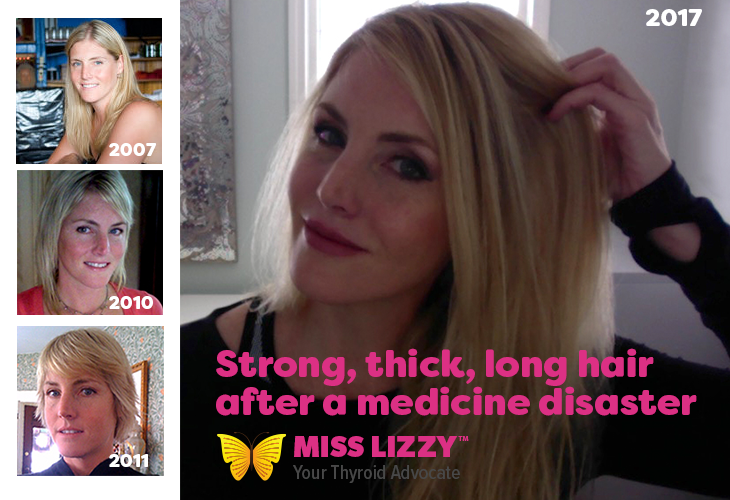
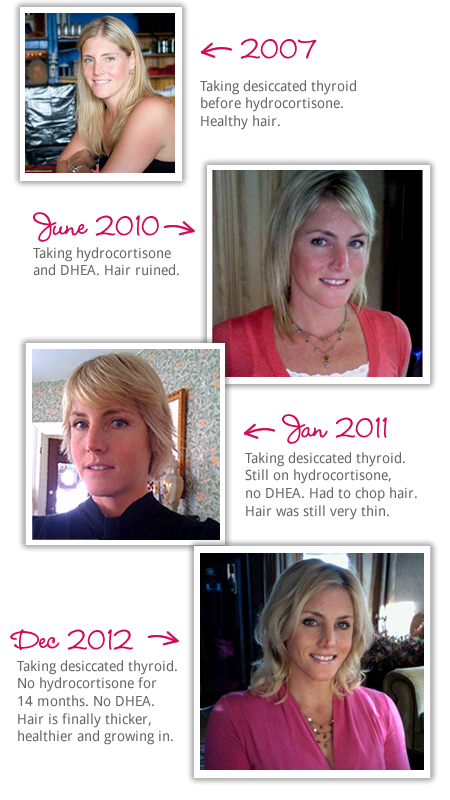
It’s been over a year since my last hair update and I am so happy to report that my hair is doing much better. During the Hair Disaster of 2010, I was taking Hydrocortisone and DHEA which I believe ruined my hair. Within six months I had lost half my hair volume and what remained broke almost to the root. I was devastated, I had no idea how important hair was to me until this experience. Turns out, lots of us hypothyroid people have hair problems.

hair_sagaIt’s taken a long time to see my hair length and volume return because hair grows about 1/2″ a month. The hair volume and thickness is coming back, and the damage and breakage from the DHEA has grow out and been trimmed off. It was a scary journey, as I am sure you can imagine. Heartbreaking, in fact.

From 2012 to 2015 my hair grew in healthy but it was still thin, fine and wouldn’t grow past my shoulders. The big change came in 2015 when I switch thyroid medicine. Up until the winter of 2015 I had been taking natural desiccated thyroid medicine but over time I had noticed my hypothyroid symptoms creeping back in. This lead me to make a big change, switching to T3 only medicine.

Within a week of switching to T3 medicine I started to feel more energy and the hypothyroid symptoms improve. Two months after switching to T3 medicine I noticed more hair growth at my scalp. When I ran my fingers through my hair I could feel the increasing hair volume.

Two years later in 2017, my hair is once again long, thick and full. It isn’t dry, brittle and thin like it had been when taking the other medicines from 2010-2012.

Whether the issue was not converting the T4  to T3 in the natural desiccated thyroid medicine, low iron, or lingering adrenal issues, I can so for certain that T3 medicine works far better for me natural desiccated thyroid medicine.


Miss LizzyHypothyroidism Ruined My Hair
Conditioner instead of Shampoo for Fragile Hair

Conditioner instead of Shampoo for Fragile Hair

After the Great Hair Disaster of 2010, I learned a great tip to care for fragile hair. The method is “Conditioner Only” or CO, which means instead of shampoo just use conditioner!

Shampoos can make hair more dry and brittle because it prevents the hair’s natural sebum from doing its job.

Conditioners have a cleansing agent like shampoo but they can be gentler on hair. Dry brittle hair is common with hypothyroidism so we need gently methods for our hair.

Choosing the Right Hair Conditioner 

Its important to use a Silicone-free conditioner because silicone flattens the hair and will end up greasy. Look for conditioners free of Parabens, Silicone, Dimethicone. Read the label to make sure they aren’t hidden in the ingredients.

Inexpensive conditioners can work just as well as expensive ones. My favorites are Garnier Pure Clean because I can get a huge bottle at Target for about $6, Nature’s Gate line from Whole Foods, and Suave and Alberto VO5.

How to Wash Hair with the Conditioner Only Method 

This method is so simple, it saves time and money, and for me the results were great.

  • Shower as usual, wet hair thoroughly using warm or hot water.
  • Use a good amount of condition (like 1/4 cup) and condition the roots liberally.
  • Massage your scalp like you would with shampoo. There will be no lather which might takes some adjusting but trust me it works.
  • Rinse thoroughly.
  • For added shine and silkiness use a tiny tiny bit of Moroccan Oil on damp hair ends.
  • Style as usual.

Tips:

  • It can take 3-4 washes before the natural hair oil start to work on their own again.
  • Every few months, using a gentle shampoo is okay.
  • If hair starts to get a little dull, use a silicone-free clarifying conditioner like Suave every so often.

Several friends have converted to conditioning only and really like it. If you try it, I would love to hear what you think and what conditioner works for you.

During the time that my hair was damaged, dry, brittle and fragile due to thyroid treatment, the conditioner only method helped my hair to feel soft, get stronger and eventually grow out again.

Miss LizzyConditioner instead of Shampoo for Fragile Hair
Supplements to Strengthen Dry, Brittle, Thin Hair

Supplements to Strengthen Dry, Brittle, Thin Hair

In May 2010, using myself as the usual experiment-test-dummy, I took DHEA to see if it would help with my thyroid and adrenal issues. Within three weeks I lost over half my hair volume, and what hair I had left broke almost to the root. Devastating? Yes!

At the time I had been taking Natural Desiccated Thyroid medicine, Hydrocortisone for adrenal fatigue which was going pretty well. But then added DHEA. The combination was a hair disaster.

Until it was gone, I had no idea how much I loved and identified with my long hair. For a year now I’ve been sulking and depressed, enviously watching women with long hair.

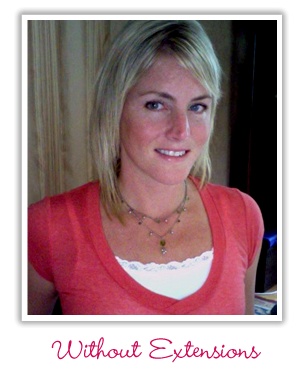
For a while I wore hair extensions which was great and helped me through the early trauma of losing almost 8 inches of hair. Finally I’ve recovered, and now embracing the short hair while it grows out.

That’s the backstory, now the goods news! I’ve done tons of research on how to grow and maintain healthy hair, which I am excited to share. Even if you have strong hair, you might know someone who has gone through a similar tragedy. If you have hair care tips, please share! In my research, it seems that growing strong and healthy hair has four key parts:

Hair Growth: Iron Supplements

My first concern was speed of hair growth. Every morning in the mirror, I desperately willed my hair to grow. Apparently healthy hair grows about 1/2 inch a month. So 6 inches a year! But for us hypothyroid people, I read we often have low iron which means hair grows slower! My iron was very low, so I made sure to take my iron (25 mg/day). From what I’ve read it takes about 3-4 months to get iron levels up so it was important for me to be diligent.

Hair Strength: Zinc

My hair had inches of terrible split ends. So I had to work on strengthening my hair. I read that Zinc was good for hair strength (also supposedly good for thyroid) so I added Zinc 10mg a day. My hair is no longer splitting, and the new growth is getting stronger. Thumbs up for the zinc. Plus I noticed an added bonus of less acne, woot!

Hair Shine: Omega 6

I read that Evening Primrose Oil Omega-6 was good for strength and shine, so I’ve been taking Evening Primrose Oil 1350mg 2/day for a year. It’s a little hard to tell if this made a difference with my hair, but it seems like it hasn’t hurt. And the Evening Primrose Oil definitely helped with PMS and mood swings! That was a huge bonus.

Stress: Vitamin C

When the body is in stress it draws from nutrients from the hair, skin and nails first. My hair tragedy was a clue that my body was not happy with me last year, and very stressed. In Adrenal Fatigue, James Wilson writes about the importance of Vitamin C to help the adrenals deal with stress.

Recently on Janie’s Blog on Stop the Thyroid Madness, she feels she never had adrenal fatigue because she has always taken lots of Vitamin C. This was great info! For the past year, I upped my dose of Vitamin C to 2k units a day with 1k units of bioflavinoid (for absorption). Spread into four doses a day of 500mg. When I take my Vitamin C, I feel really solid all around. The bonus for taking higher doses of Vitamin C, I wasn’t sick at all this year.

PS – Thanks to the ladies at the Yahoo Grow Hair Forum who saved me many times.


Miss LizzySupplements to Strengthen Dry, Brittle, Thin Hair
Candida & Hypothyroidism

Candida & Hypothyroidism

Are your carb cravings out of control? Do you have allergies or sinus headaches which don’t respond to treatment? Recurring infections like colds, ear aches or sinus infections?

Do you have symptoms of IBS, flatulence, bad breath or acid reflux? Or mental emotional difficulties like attention deficit, depression, irritibility, poor memory? Or perhaps have cold hands, cold feet or a cold nose?

If you’ve been getting thyroid treatment but still these and other health issues which won’t go away, its possible you might have another condition called Candida. Thyroid and Candida problems are direclty related and both may need treatment.

Most commonly we hear about Candida in the form of yeast infections of the genital area, but less commonly discussed is Candida’s affect on the whole body. Here is my experience with Candida…

Yeast in Unexpected Places

After I was on thyroid treatment for over a year, even though I felt a lot better in general, I still experienced low energy and lethargy, frequent sinus headaches, sinus infections, post nasal drip, chest congestion, wheezing, irritability and other symptoms.

Also I experienced a painful, red, itching, burning rash on the corners of my mouth, and the inside of my elbows. Over the years I had asked doctors and dermatologists about this rash but they didn’t have a diagnosis.

When I explained the symptom to Dr. Brummer, my super awesome doctor, he was the first one to suggest it might be “Thrush” or Candida, more commonly known as yeast overgrowth. I never had yeast infections in my girl parts, but he explained that yeast is throughout our bodies and when the body is out of balance the yeast can overgrow and cause many health problems.

Also Dr. Brummer asked about, ahem, my bowel movements. On a side note, bowel movements are a really important indicator of body health. More on that later. Anyway, I explained that some days I was very constipated (which is part of low thyroid) and other days I would have very loose stinky bowel movements (sorry TMI, but its important).

Dr. Brummer explained that the bowel movement problems and smell could definitely be Candida. Candida lives in the intestines so it can cause bad gas as well as bad breath. In fact, people who have IBS (Irritable Bowel Syndrome) may in fact be battling Candida.

How Yeast Grows

As noted on Overcomingcandida.com, the primary factor for yeast overgrowth is the use of antibiotics, especially over a period of time with repeated uses. The antibiotics destroy bacteria allowing the yeast to grow. In women, its common knowledge that antibiotics can cause vaginal yeast infections.

But what if the yeast infection wasn’t just in the girl parts? What if the yeast overgrowth was in the entire body? And what if it affected men the same way? That’s exactly what happened to me.

Yeast also feeds off of simple carbohydrates like sugar, grain, rice, potatoes, and alcohol. I always felt pretty awful after eating simple carbohydrates but never knew why. It happened because the yeast would make me crave carbs, then it would feed off the carbs, causing a yeast bloom which caused the various symptoms like sinus infections, thrush, flatulence and more.

So in addition to having yeast on my mouth and skin, I believe it was in my lungs, intestines, and also in my sinuses.

Allergies, Sinus Infections or Candida

For twenty years I had terrible sinus headaches and sinus infections. I would get sinus infections with a bad fever and chillsat least four to five times a year. Each time the doctor would give me antibiotics. When the antibiotics stopped working, they would put me on 3 week cycles of antibiotics. I was on antibiotics for years.

Over time, I believe, low thyroid and antibiotics led to Candida overgrowth in my body, and especially in my sinuses. Without knowing about the Candida connection, doctors continued to prescribe antibiotics for sinus problems when in fact the antibiotics were a big part of the problem!

The Candida Thyroid Connection

On Stop the Thyroid Madness, Mary shares her story of being undiagnosed hypothyroid and developing Candida. Eventually someone on the Yahoo Thyroid group explained told Mary:

Hypothyroidism causes low body temps which allows fungal overgrowth. Get the temps up and the fungal/yeast will have nowhere to live.”

Some research even indicates that Hypothyroidism can be caused by Candida. Either way, there is a clear connection between Hypothyroidism and Candida.

Candida Symptoms

Here is a full list of Candida Symtpoms.

Treating Candida

If this sounds like you, there are treatment options for Candida. I will write a follow-up post with detailed treatment instructions.

More Resources

To learn more about Candida visit these websites:

Candida in the Sinuses

Curezone Candida Discussion

Candida Thyroid Connection

Miss LizzyCandida & Hypothyroidism

What is Adrenal Fatigue?

What is Adrenal Fatigue?

Low energy, feeling tired and run-down, frequently waking up at night, craving salty or sweet snacks, frequent illness, feeling overwhelmed, difficulty waking up in the morning are all possible signs up Adrenal Fatigue.

With Adrenal Fatigue the body burns itself out trying to produce Cortisol. If you’ve had a poorly functioning thyroid, the body considers this a kind of stress which could then drain the adrenal system leading to a host of symptoms.

According to AdrenalFatigue.org, as the name suggests, the paramount symptom is fatigue that is not relieved by sleep. You may look and act relatively normal with adrenal fatigue and may not have any obvious signs of physical illness, yet you live with a general sense of un-wellness, tiredness or “gray” feelings.

People experiencing adrenal fatigue often have to use coffee, colas and other stimulants to get going in the morning and to prop themselves up during the day.

Another important detail is that Cortisol helps move the thyroid hormone from the blood to the cells. So while you might be taking Natural Desiccated Thyroid Medicine for Hypothyroidism, it may not be making into the cells because of the low Cortisol. In short, treating Hypothyroidism also means looking at Adrenal Fatigue.

Well we all know stress is bad. But why?

The adrenals are what handle the Fight or Flight” response in the body. Meaning, we experience stress, adrenaline kicks in and gives our body an energy boost.  As cave women, it was great for fighting the occasional tiger (or running from said tiger) which we only had to do on occasion. But in the modern world we can experience stress every day from work, family stress, financial stress, poor diets, sickness, chronic illness or disease which means continually draining the adrenal system. When we are sick with a condition like Hypothyroidism, our bodies are continually draining the adrenals. Many people who have hypothyroidism also find they have adrenal fatigue.

What happens when we continually exhaust the Adrenals?

We risk burning out the adrenals, resulting in a “crash”.  You know that feeling, for example, after a big family holiday ends you just want to lie on the couch for days?  Or you’ve finished a big work deadline and either you get sick, or simply can’t do anything for a few days? That’s the adrenal crash from stress.  When you say “you burned yourself out” that’s totally true! You did. You fought that tiger, and you won, sister! But now you’re paying.

Why Don’t People Talk About Adrenal Fatigue More?

Although adrenal fatigue affects millions of people in the U.S. and around the world, conventional medicine does not yet recognize it as a distinct syndrome. According to AdrenalFatigue.org, Adrenal Fatigue has been known by many other names, such as non-Addison’s hypoadrenia, sub-clinical hypoadrenia, neurasthenia, adrenal neurasthenia, and adrenal apathy. 

Personally, I think every doctor, and every person would benefit from knowing about this condition. Adrenal fatigue can wreak havoc with your life. In more serious cases, the activity of the adrenal glands is so diminished that you may have difficulty getting out of bed for more than a few hours per day.

As the adrenals become more tired, every organ and system in the body is increasingly and profoundly affected. Changes occur in carbohydrate, protein and fat metabolism, fluid and electrolyte balance, heart and cardiovascular system, and even sex drive.

Many other alterations take place at the biochemical and cellular levels in response to and to compensate for the decrease in adrenal hormones that occurs with adrenal fatigue. The body does its best to make up for under-functioning adrenal glands, but it does so at a price.

Learn more at According to AdrenalFatigue.org, or read Dr. Wilson’s book, Adrenal Fatigue: The 21st Century Stress Syndrome.

What causes adrenal fatigue?

Adrenal fatigue is produced when your adrenal glands cannot adequately meet the demands of stress.* The adrenal glands mobilize your body’s responses to every kind of stress (whether it’s physical, emotional, or psychological) through hormones that regulate energy production and storage, immune function, heart rate, muscle tone, and other processes that enable you to cope with the stress. Whether you have an emotional crisis such as the death of a loved one, a physical crisis such as major surgery, or any type of severe repeated or constant stress in your life, your adrenals have to respond to the stress and maintain homeostasis. If their response is inadequate, you are likely to experience some degree of adrenal fatigue.*

During adrenal fatigue your adrenal glands function, but not well enough to maintain optimal homeostasis because their output of regulatory hormones has been diminished – usually by over-stimulation.* Over-stimulation of your adrenals can be caused either by a very intense single stress, or by chronic or repeated stresses that have a cumulative effect.*

How can I tell if my adrenals are fatigued?

You may be experiencing adrenal fatigue if you regularly notice one or more of the following:

  1. You feel tired for no reason.
  2. You have trouble getting up in the morning, even when you go to bed at a reasonable hour.
  3. You are feeling rundown or overwhelmed.
  4. You have difficulty bouncing back from stress or illness.
  5. You crave salty and sweet snacks.
  6. You feel more awake, alert and energetic after 6PM than you do all day.

Read the full symptom list.

Are there health conditions related to adrenal fatigue?

The processes that take place in any chronic disease, from arthritis to cancer, place demands on your adrenal glands. Therefore, it is likely that if you are suffering from a chronic disease and morning fatigue is one of your symptoms, your adrenals may be fatigued to some degree.

Can people experiencing adrenal fatigue heal and feel good?

According to AdrenalFatigue.org, YES. And in my own experience, and reports from other patients, YES. It is possible to heal struggling adrenals and feel better again.

What It Means For Me, Miss Lizzy

With proper care most people experiencing adrenal fatigue can expect to feel good again. For me personally, I brought myself to good heath and was able to treat my adrenal fatigue and feel better. It is an on-going journey. I am careful to protect my body from stressors so I can remain in good health. If I stress my body too much, it lets me know and I listen.

Miss LizzyWhat is Adrenal Fatigue?

Adrenal Fatigue Treatment Options

There are several Adrenal Fatigue treatment options, including supplements and prescriptions, depending on the severity of the condition and doctor recommendations. This information is made available for educational purposes, to discuss with a good doctor.

Licorice

For slightly Low Cortisol. Licorice is an anti-stress herb known to increase energy, endurance and vitality. Licorice has also been used to help decrease symptoms of Hypoglycemia. The best form of Licorice is in tea. And can also be found in the form of capsules, liquid herbal extract and dried root which can be chewed. 1

Ashwagandha Root

Therapeutic uses of Ashwagandha date back to at least 1000 B.C. Ashwagandha has beneficial effects on the adrenal tissue and function. Ashwagandha is considered an adaptogen which means it helps the body function more towards its normal level. Ashwagandha is capable of normalizing cortisol levels whether they are low or high. But it should not be taken at doses higher than 35 gms/day because this would inhibit adrenal function.  2

Adrenal Cortical Extracts

According to Dr. James L. Wilson  3 probably the most reliable way of rebuilding adrenals from adrenal fatigue is the use of adrenal cortical extracts. In 1918 Adrenal Cell Extracts became commercially available, and since then they have been a powerful form of treatment for non-Addison’s type of hypoadrenia.

There are several brands available both in table and liquid form. According to Wilson the the liquid is generally more powerful than the tablet, but also costs more. He uses the tablets for milder cases, and the liquid in moderate to severe cases. Dr. Wilson explains:

  • Dosage for the adrenal cortical extract tablets is 6-12 per day, depending on severity
  • Dosage for the liquid is usually one vial under the tongue 2 or 3 times a week as directed by your physician

Many doctors are unaware of the existence of this type of therapy and do not know how to use it. This can mean some doctors are reluctant to explore it even though there is a long history of its use.

Adrenal glandular products 

According to Stop the Thyroid Madness, Adrenal glandular products should be avoided.

Hydrocortisone (HC)

Corticosteroid therapy with Hydrocortisone is the best natural form of cortisol, available by prescription 4. When administered in physiological doses of approximately 20 mg per day it can give the adrenals a rest. This is considered a short -term protocol for treating adrenals with a goal of gradually decreasing the dose after six months.

For me personally, and from the stories of others, Hydrocortisone helped me to strengthen my adrenals and provide the cortisol needed to help with absorption of Natural Desiccated Thyroid medicine. In hindsight, I believe I stayed on Hydrocortisone too long and should have weaned off after six months. But it did indeed help me.

Notes:

  1. Adrenal Stress, Dr. James L. Wilson, p. 203
  2. Adrenal Stress, Dr. James L. Wilson, p. 204
  3. Adrenal Stress, Dr. James L. Wilson, p. 209
  4. Adrenal Stress, Dr. James L. Wilson, p. 217
Miss LizzyAdrenal Fatigue Treatment Options