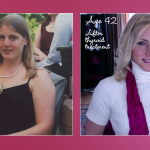
The Depression Hypothyroid Connection

One of the many unfortunate symptoms of Hypothyroidism is Depression, but its easy to think they are unrelated conditions and treat them separately with separate medicine. In some cases they are unrelated, but on Stop the Thyroid Madness (STTM) there is a long list of inspiring stories of depression that went away when people started using natural desiccated thyroid medicine like Naturthroid to treat Hypothyroidism. I am one of these success stories.

I didn’t have full-blown, year-round depression, so I never thought I was one of those people who needed anti depressants. What I did experience was a low-level sadness that felt almost like the muscles in my face were heavy, making the act of smiling unthinkable. It wasn’t a long-lasting depression or hurtful to those around me.  Just a general weight-of-the-world, dragging feeling.

The unusual part is I felt this “Hypothyroid depression” most noticeably during the months of March, April and May, which always seemed odd to me.  One would think the dark part of winter would be the worst time for depression. Not in the spring when the days are getting longer, flowers are blooming, birds are chirping, and everyone is happy. I should have felt great, but instead I felt miserable. Every year starting at age 13, I dreaded the doldrums of spring.

When I started researching Hypothyroidism, I learned something really interesting about depression. According to nutritionist and Leptin expert, Byron J. Richards, when daytime high temperatures vary 25 – 40 degrees over a period of a few days, the thyroid system really struggles to keep up. This means fall and spring seasons are hard on the thyroid and can cause a mental funk or depression. So that was it, incredible! Finally an answer that made sense.

This type of depression is so subtle, its easy to pass it off as related to other things in life, or not even call it Depression. While other Hypothyroid sufferers experience depression that is much more intense.  The good news is depression has gone away for so many of us after Hypothyroid treatment with natural desiccated thyroid medicine. After getting my thyroid medicine to the right dose I am happy to report I can finally enjoy a spring.

xxoo

Lizzy


Miss LizzyThe Depression Hypothyroid Connection

Do It Like It Matters

My yoga teacher, Katie, is one of the great influences in my life.  She has a unique talent for challenging her students to push their limits but in a supportive, encouraging way. She never says “Tonight we are doing handstand… oh silly you, you just fell! What were you thinking?”.  Yet that’s the kind of thing we do to ourselves all the time. We try something challenging or new, and then flog ourselves with regret and self-doubt. Or we stay in old patterns that aren’t working for us simply because we are afraid of making a change. Change is scary! I totally get that.

In yoga class when we approach a scary pose like handstand, Katie says just touch in with it, even if you don’t do the full pose, keep touching in and it will become less scary. And here is the connection. This applies to everything in life. To reach any goal, we have to decide to make that change, have courage, then do it like it matters.  Know that its okay to fall because falling will happen, that’s how we learn.

So tonight my message is…. if you want to make a change in your life, only you can make it happen.  No one is going to say “I told you so,”  but no one is going to do it for you.  So get out there and do it, start now, start tomorrow morning, but make a decision to start.  Be proud of your willpower and courage.

xxoo

Lizzy

Miss LizzyDo It Like It Matters

Getting Started with Natural Desiccated Thyroid Medicine

When starting natural desiccated thyroid medicine like Naturthroid or Erfa, the big questions are “How much should I take?” and “How quickly should I increase my daily dose?”. While I am just a patient and can’t give medical advice, I can share my experience, and what others have tried.

Getting to the right dose for us personally is really important. You might think being on too much natural desiccated thyroid medicine is the only problem. But being on too low a dose can also be problem for some people.

Personally, I was fearful of being on too high a dose, so I held back on increasing my thyroid medicine, and waited long stretches in between increases. The result was a much longer time recovery time. While I advocate being cautious, I was overly cautious. I could have reached my optimal dose within 2 months, but instead took two years!  So here is some information about how others safely, but quickly, reached their optimal dose:

Getting Started

According to Stop the Thyroid Madness (STTM), a safe starting dose is around one grain (or pill) a day which is 60 mg (for those with poor adrenals, starting lower is suggested). The STTM site says hold the starting dose for a week or two at the most to allow the body to adjust. Then start raising about 1/2 grain (or pill) every few weeks according to doctors guidance.

On the STTM they learned if they didn’t raise from a starting dose within two weeks, the hypothyroid symptoms started to return with a vengeance. So staying on too low a dose was a problem for them.

If hypothyroid symptoms still persist after reaching 2-3 grains (pills) a day, rather than raising more they found it best to hold their dose for at least 4 – 6 weeks to allow the body time to adjust.  Raising higher at this stage could cause a patient to dose too high, resulting possibly in hyper symptoms like a fast heart rate, jitters and sensitivity.

Finding the Optimal Dose

STTM says most of us end up needing between 3 – 5 grains (pills) to reach our optimal dose. For people its higher and for others its lower. There isn’t a one size fits all.  Personally, at one stage I raised as high as 3 1/4 pills thinking I need a higher dose, but I had a bad hyperthyroid reaction which included extreme noise, site, sound and sensitivity, as well as, irritability and edginess. So I eased back to find 2.5 pills was my optimal dose. You and your doctor have to explore and try things according to your individual needs, and the removal of hypothyroid symptoms.

Remember, too low a dose can be equally problematic to being on too high a dose. So think like Goldilocks and find the spot that’s “just right.”

xxoo

Lizzy

Read more information about dosage on Stop the Thyroid Madness

Miss LizzyGetting Started with Natural Desiccated Thyroid Medicine
The Secret Message Behind Chocolate Cravings

The Secret Message Behind Chocolate Cravings

Did you know craving chocolate, especially during PMS, can actually be sign of low magnesium?  According to James L. Wilson, Ph.D., author of Adrenal Fatigue , magnesium helps mediate the symptoms of PMS because it is is directly involved with the production of progesterone. Since chocolate contains high levels of magnesium, craving chocolate is the body’s way of getting the supplements it needs.  Its incredible how smart our bodies are!

The down side of course is caffeine which, if you have Adrenal Fatigue, overstimulates an already exhausted system.  The solution, according to Wilson, is to let the chocolate cravings be a reminder to take more magnesium. He recommends 400 MG of magnesium a day, either all month long for severe PMS suffers, or for milder cases of PMS from Day 12 or 14 of your cycle (until the first day of the next cycle).

Within two weeks of starting magnesium supplementation, Wilson says cravings for chocolate should disappear (or be negligible). If you are still craving chocolate this likely means more magnesium is needed.

Magnesium can be found in foods such as almonds, cashews, other nuts and peas.  And if you are following the HypoT Girl’s Diet with me, then you should be getting lots of magnesium from eating nuts all day. I rarely crave chocolate anymore, so there must be something to this stuff!

xxoo

Lizzy

Miss LizzyThe Secret Message Behind Chocolate Cravings

Fear of Failing My Lab Work

Ever since my first lab work for Hypothyroid testing came back “normal,” I have a terrible fear of failing my labs. I always knew my body wasn’t working right, but year after year the lab work claimed otherwise. Frustrating! And the doctors only believed the numbers, they didn’t believe me. It was a dreadful feeling. In my heart I knew something was wrong.  But somehow I felt like a liar, because see there, the numbers don’t lie so it must be me. But how does one actually fail at lab work?

Its easy to feel judged and criticized if doctors only look at labs. Therein lies the problem.  It wasn’t my lab work that was failing, I hadn’t found the right kind of doctor, someone who looked at the lab work but also listened to how I felt.

When I finally found the doctor who treated me (let’s call him Dr. B) he explained that lab work has ranges of normal, but “normal” is different for everyone. In addition to lab work, he said we needed to look at symptoms, as well as a my “sense of self” (meaning, trust my own instinct about my health). Hallelujah!  This philosophy about medicine was totally different from my past experiences.

Here is a great example of where symptoms and labs didn’t line up, where my lab work failed me.  In my situation, my TSH was low before getting treatment. Currently with treatment my TSH is .01.  By the standards of many doctors and Endocrinologists this TSH level is considered suppressed, which means they would take me off thyroid medicine immediately (horrifying). Yet with suppressed TSH, I feel better now than I ever felt in my life.  My Hypothyroid symptoms are almost all gone. Its confusing when the labs say one thing but your body says something else. Luckily my doctor looks beyond labs.

Still many doctors and Endocrinolgists are using the unreliable TSH test results to diagnose Hypothyroidism. According to my experience and patients on Stop the Thyroid Madness TSH is not a reliable marker for Thyroid function. If treatment is based entirely on the TSH test, how many people out there are “failing at lab work” and not getting treated?

So beware any doctor who makes you feel like a Hypothyroid failure!  It may not be the lab work after all.

xxoo

Lizzy


Miss LizzyFear of Failing My Lab Work

Getting to Yes, with Your Doctor

Whether you are just getting diagnosed as Hypothyroid and want to try a natural desiccated thyroid medicine like Naturthroid, or you’ve been diagnosed and want to switch from a T4-Only medicine like Synthroid or Levoxyl there are ways to talk with your doctor.  Start with then end in mind; the goal is getting to “Yes”.

I have found the easiest way in getting to yes is to approach everything like an experiment. This takes the pressure off everyone, and gives me a chance to learn with the guidance of my doctor. Here is what say:


Hi Doc, Let’s try this experiment and see what happens! If we feel it doesn’t work I am totally open to trying something else.


Finding the right treatment has been a journey for me.  I needed to be able to test and try new things.  So this approach created an open dialogue with my doctor which allowed us both to learn. Success!

xxoo

Lizzy


Please note: any experiment is at my or your own risk. So be careful, educated and ultimately follow the advice of a doctor you trust.


Miss LizzyGetting to Yes, with Your Doctor

Simple Tips for Starting or Switching Thyroid Medicine

Getting treatment for Hypothyroidism can seem overwhelming and intimidating, so today’s post is about KISS. Keep it simple sweetheart!

Getting to Yes with Your Doctor 
Whether you are just getting diagnosed Hypothyroid, or switching from a T4 medicine like, simply tell your doctor that you want to try natural desiccated thyroid meds as an experiment! That you have heard good things about this type of medicine and want to try it first. But if it doesn’t work you are totally open to trying something else. The goal is getting your doctor to say “yes,” so lowering the pressure makes it easier for them to agree.

Switching Meds May Be an Easy Phone Call
If you are taking a synthetic T4 med like Synthroid switching to a natural desiccated medicine like Naturthroid may be easier than you think.  So save yourself a trip to the doctor.  Instead call up your doctor today and ask them to call in a new prescription to your pharmacy. Do it with a smile in your voice. Ask them to advise on “How much should I take?” rather than “Should I or shouldn’t I switch?”.

If the Labs Say You Aren’t Hypothyroid
If you doctor says “according to the labs you are not hypothyroid”, show them your body temp chart and symptoms checklist and explain that you have most of the symptoms (assuming this is true) and would like to try treatment as an experiment. This takes the pressure off big time. And if it doesn’t work you are totally open to trying something else.  If the doctor still resists just smile, say thanks anyway, and get out of there as fast as you can. Then email me and we will find you someone better.

Even though the journey will be challenging at times, think of yourself as a Georgia Peach. Sweet on the outside with a solid core. You know what’s best for you, and you are taking care of yourself!

xxoo

Lizzy

Miss LizzySimple Tips for Starting or Switching Thyroid Medicine

Could Salt Cravings be an Indicator of Stress?

41torQRdadL._SY355_

Remember all the talk about how salt is so bad for our health? And the low-sodium, flavor-less diets that ensued?  For years I ate bland, tasteless meals thinking I was doing the healthy thing.

But get this: For people with Adrenal Fatigue salt is actually good for us! According to EIR, Sodium is an essential nutrient for fluid balance which in turn affects Cortisol and Aldosterone. Low sodium contributes to a range of related Adrenal Fatigue conditions including low-pressure and fatigue (which I totally have).

According to James L. Wilson, Adrenal Fatigue The 21st Century Stress Syndrome, some people are able to assess their adrenal function simply by their desire for salt, as in salt cravings. See, our bodies are pretty smart.

Boosting Energy

Wilson suggests to boost energy in the morning and before the mid-afternoon crash, drink salted water (1/8 – 1/4 tsp., more or less to taste).

If the salted water tastes bad, or makes you nauseated its a good indicator you don’t need it or need less salt. But if the salted water tastes good that’s how you know you need the salt.

Salt Quality

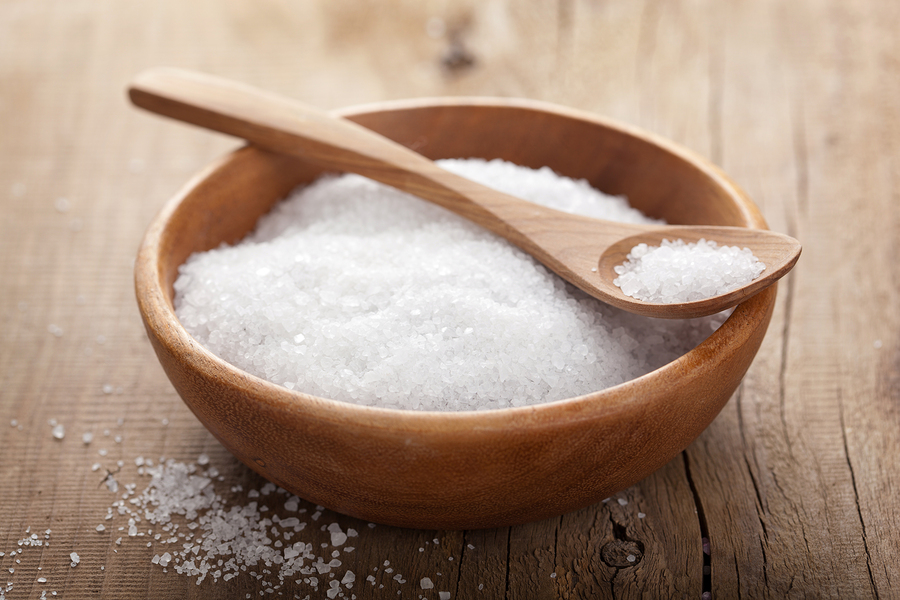
The quality and taste of the salt is a really important detail  Table salt is wretched stuff, even Kosher Salt tastes a little yucky to me now.  Instead, I use the brands Real Sea Salt and Celtic Sea Salt which can be purchased online, at Whole Foods, or many health food stores.

These brands cost more than table salt so be prepared for sticker shock. But the best way to understand the difference is doing a taste-test against regular old table salt (the caveat: be forewarned, you will never go back to Morton’s). For the taste and nutritional value, I think good salt is worth the expense.

So next time you have a craving for salt, grab that shaker with confidence! Your body could be telling you something.

Miss LizzyCould Salt Cravings be an Indicator of Stress?